In order to achieve equitable and sustainable rural innovation and leverage the AI moment, we must change the narrative.
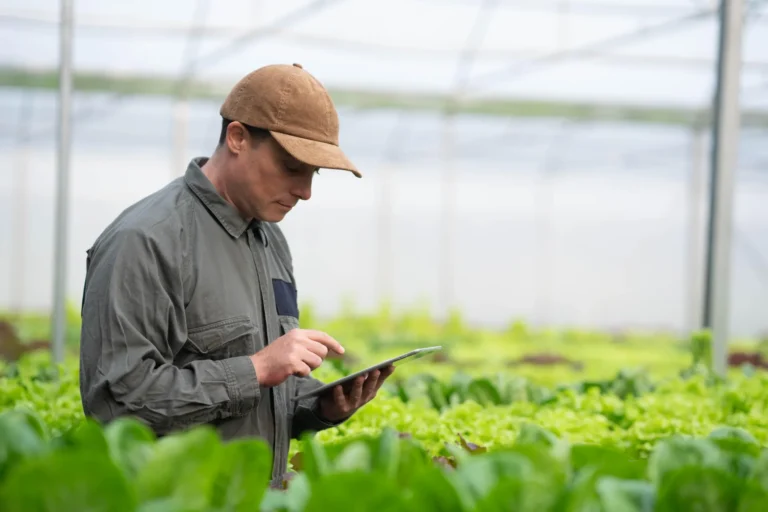
In our work—with grantees, through firsthand observation, and in the stories we intentionally seek—we’ve witnessed the power of technological innovation in rural communities. It takes many forms across the country, often without a data center in sight. Yet these stories rarely break through mainstream narratives, reinforcing a persistent misconception: that meaningful innovation happens elsewhere. In reality, some of the most consequential innovation in the country is unfolding right now in rural places. The question is not whether it exists, but how—alongside partners—we change what gets recognized and resourced, and how we spotlight the quiet yet powerful work shaping our collective future. To better understand what stands in the way, we convened people who live and work in rural communities over several months to examine the gaps in how rural innovation is understood, and to consider what it would take to shift the narrative.
Reclaiming Rural Narratives: Insights from our Rural Storytelling Convening
As we see every day across the social sector, in communities, and on our screens, what ultimately shapes action is not just policy or investment, but the underlying beliefs and narratives that frame how we understand the past, interpret the present, and imagine the future of American communities. Stories determine who is seen, who is heard, and which futures are considered possible. At Siegel, we view narrative building as essential infrastructure—complementary to communications, but distinct in its role of expanding collective imagination and creating the conditions for new solutions to take root. This work helps create the legitimacy, momentum, and durability needed for approaches like those advanced by our grantees to scale and endure.
We approached this consultation with those assumptions in mind. Between April and September 2025, we convened 18 grantees and field experts working in rural places—many with deep lived experience in the communities they serve. We began with a session focused on Strategizing Rural Impact, and insights from that conversation informed two subsequent consultations: Rural Narrative and Storytelling and AI and Emerging Technology. Across all three, we entered with clear guiding questions while remaining open to emergent themes that could challenge our assumptions, sharpen our thinking, and surface new lines of inquiry.
Through this process, we sought to understand how, why, and to what ends narrative and storytelling can be uniquely impactful in rural contexts. What emerged was a textured—and at times uncomfortable—picture of rural narrative work, revealing both the transformative potential of storytelling and the real risks of misrepresentation, extraction, and oversimplification when narratives are poorly framed or externally imposed.
Below is a summary of the key insights we heard.
Reframing Persistent Narratives About Rural America
Beyond farm work to diversity, adaptability, and innovation
Participants were quick to challenge prevailing narratives that frame rural America as monolithic, white, agricultural, and resistant to change. As Tracie Powell of the Pivot Fund put it, “Everyone assumes rural means white farm worker—but that couldn’t be further from the truth.”
These dominant stories obscure the diversity, adaptability, and innovation already present in rural places. Participants described rural communities not as static or peripheral, but as dynamic ecosystems where creativity often emerges out of both necessity and strong social ties. “People don’t think about the innovation already happening in farming, food, and tech,” Bonita Robertson-Hardy of Aspen Institute Community Strategies Group noted. “Rural communities have always done more with less.”
Rural Investment as Strategy, not Charity
Several participants pushed back against the narrative that investing in rural communities is merely an act of altruism, rather than a strategic opportunity. “Helping rural communities isn’t charity,” Amanda Weinstein of CORI shared. “[Rural] communities are a smart investment in new ideas and place-based innovation.” Tight-knit social networks, shared infrastructure, and proximity between civic, economic, and cultural life were all cited as advantages that can accelerate local problem-solving and entrepreneurship.
In some places, participants noted, rural innovation is anchored by physical and social hubs that connect people and ideas. “In Vermont, community hubs are the backbone of innovation,” Chris Maggiolo of BRIC explained. “Once people see they’re part of a larger ecosystem, they lean in.”
Rural is not a Monolith
Participants were clear that while rural communities may share challenges, they do not share a single history or identity. “There’s a difference between sharing challenges and sharing history,” Betheny Gross of WGU Labs noted. “Each place has its own story, and forcing one narrative doesn’t work.”
Rural narratives are shaped by deeply local histories, including class structures and racial dynamics that are often overlooked. “Funders often miss that rural has class structures too,” Allen Smart, formerly of PhilanthropywoRx, pointed out, “and that’s a big part of the story.”
Rural needs its own metrics
A recurring theme was the mismatch between how rural narrative work actually unfolds and how it is often funded. Participants emphasized that metrics themselves shape the story that gets told. “Metrics determine the story we tell,” Chris Maggiolo noted. “If we pick the wrong ones, we miss what people actually value.”
Several participants argued for redefining what success looks like in rural places. “A coffee shop reopening on Main Street might tell you more than any spreadsheet,” Bonita Robertson said. Others emphasized that scale should not be confused with impact. “It’s not about scale—it’s about depth,” Betheny Gross reflected. “Go deep with one community instead of shallow with ten.”
Capacity also often looks different in rural spaces. Capacity constraints were described not as a lack of vision, but as a lack of people, time, and operational support. Small teams are often responsible for communications, fundraising, program delivery, and relationship management all at once.
How Rural Leaders Advise We Change the Narrative
Empower Trusted Local Voices
Across conversations, participants emphasized that rural narratives cannot be transformed unless rural people are empowered to tell their own stories. With the decline of local journalism, many rural communities have lost shared civic institutions that once helped shape local identity and accountability. In that void, storytelling has taken new and sometimes unexpected forms. As Tracie further described, “The man who reports local news on the side of his house—he’s the new local newspaper. That’s storytelling.” Similar off-platform networks—text chains, WhatsApp, and discreet print—are quietly sustaining information sharing in some rural immigrant communities.
Participants stressed that what matters most is not the platform, but trust. In smaller communities, legitimacy often comes from proximity and consistency. “Anyone can step forward,” Betheny Gross reflected. “In small towns, five or six people can change everything.” This openness creates space for elders, young leaders, teachers, artists, and informal civic actors to shape how communities see themselves.
At the same time, participants cautioned that storytelling for external audiences often distorts local realities. “Don’t write for someone else’s gaze,” Tracie Powell urged. “If you’re writing for the community, focus on rights, access, and power, not just on what outsiders find interesting.”
Storytelling as a Tool for Cohesion and Collective Futures
Participants consistently described storytelling as both a tool for cohesion and a form of power. “Storytelling is what holds people together,” Mike Felton of St. George Municipal School Unit said. “Without it, shared work falls apart.”
Internally focused storytelling helps rural communities see themselves clearly and imagine collective futures. Stories rooted in shared values can bridge political, racial, and generational divides, particularly when they center children, education, and community well-being. A tool for bringing people together in historically-divided places, Mike Felton shared, “innovation happens when we focus on what unites us—like a new building for our kids—rather than what divides us politically.”
Several participants noted that storytelling can also help rural communities move beyond nostalgia without erasing history. “If you focus on the characteristics—strength, grit, creativity—that people brought to their jobs, rather than the old industry itself,” Amanda Weinstein explained, “you can bridge generations and build towards the future.”
Participants also highlighted how internal narratives can reclaim language and identity from external misinterpretation. As Jasmine McNealy of the University of Florida shared, “The term ‘Florida Cracker’ means scrappy and proud—it’s an internal story of resilience, not an insult. Communities can define their own worth through their narratives.”
When storytelling comes from residents themselves, rather than exclusively from formal leadership, it changes who feels seen and included. “When storytelling comes from the people, not just the town board,” Chris Maggiolo observed, “it changes who feels included.”
Acknowledging Difference While Building Shared Narratives
For Native communities and communities of color, participants emphasized that storytelling has long been a matter of survival and self-determination. “Communities of color and Native communities have had to tell their own stories because others caused harm or ignored them,” Kathy DeerInWater of AISES shared. Tribal networks, in particular, were cited as longstanding examples of storytelling embedded in governance and collaboration. “Tribal networks have been doing this for decades—building councils and coalitions through storytelling. It’s always been the center of the work.”
Participants also named the harm caused when economic development narratives obscure lived experience. Data centers, prisons, and extractive industries were cited as examples of projects framed as economic boons while creating long-term social, environmental, and class-based harm. “Data centers have been a huge vector of exclusion and harm,” Jasmine McNealy explained, “but are still touted as bringing jobs, even when only a few of those jobs benefit local residents.”
Trust, Capacity, and Rethinking Scale
Convenings and peer learning spaces were described as critical counterweights to isolation. “Convenings like this help,” Chris Maggiolo shared, “connecting small teams so they don’t feel isolated and can share lessons across rural and urban boundaries.”
Participants were candid about philanthropy’s role in reinforcing existing power dynamics. “Philanthropy funds the same people over and over and wonders why nothing changes,” Chris Maggiolo said. “Trust people closest to the problem.”
Implications for Siegel’s Rural Learning Agenda: Stories, Convenings, and New Definitions of Scale
Taken together, these insights reinforce a central lesson from the convening: rural storytelling—created by and accountable to individual communities—is not a communications tactic. It is infrastructure.
By this, we mean the relationships, platforms, skills, and local capacity that allow stories to be created, shared, sustained, and trusted over time. When rooted in lived experience and local context, this infrastructure does more than increase visibility; it enables connection, confers legitimacy, and supports durable systems change rather than episodic attention.
Through sustained engagement with rural leaders around narrative and identity, we developed a deeper understanding of the people, incentives, norms, and power dynamics that shape rural systems and influence how change happens. Those insights inform not only how we think about storytelling, but how we approach grantmaking, partnerships, problem-solving, and the lines of inquiry we are pursuing in 2026 as we work toward a more genuinely whole-of-society approach.
As we continue to build our rural learning agenda, several areas warrant deeper exploration: the role of storytelling in systems change; convening as relational infrastructure rather than a one-time intervention; and the need to keep challenging narrow definitions of scale and impact.
If rural innovation is to be supported equitably and sustained over time—particularly amid rapid advances in AI—then narratives must be built with the same care, investment, and accountability as any other form of infrastructure.
This is the first in a series. We’ll continue to share insights from past and future convenings as this work evolves and as we shape our learning and priorities for 2026.
Acknowledgements
We are deeply grateful to the participants who generously shared their time, insight, and candid perspectives throughout this consultation. Their lived experience, intellectual rigor, and willingness to challenge assumptions shaped this work in meaningful ways:
- Betheny Gross
- Allen Smart
- Jasmine McNealy
- Taina Torres
- Amanda Weinstein
- Chris Maggiolo
- Bonita Robertston-Hardy
- Kathy DeerinWater
- Tracie Powell
- Colby Hall
- Mike Felton