Insights

Closing the loop on our inquiry-driven approach means we share what we’re learning. Click on the filters below to explore insights from us and our network.

Search & Filter

February 4, 2026/Big Ideas, Reflections

Rural Consultation Series: Rural Innovation Is Happening. Why Don’t We Hear More About It?

In our work—with grantees, through firsthand observation, and in the stories we intentionally seek—we’ve witnessed the power of technological innovation in rural communities. It takes many forms across the country, often without a data center in sight. Yet these stories rarely break through mainstream narratives, reinforcing a persistent misconception: that meaningful innovation happens elsewhere.

Read More →

January 29, 2026/Big Ideas

For Rural Communities, AI Must Mean More Than Data Centers

Data centers are rapidly sprouting across America, with technology companies spending billions to build thousands of facilities nationwide. Rural areas in particular have seen a surge in development as companies seek cheaper land and generous local tax incentives. Many see the trend as providing an entry point into the growing AI sector for communities outside traditional urban centers, with proponents arguing that data centers represent a “new savior” for regions in need of much-needed tax revenue and high-paying jobs. But proponents are missing one key issue: Data center jobs are not AI jobs.

Read More →

January 27, 2026/Case Studies

Case Study: CommunityShare

CommunityShare ignites civic engagement and a passion for learning by activating the wisdom and lived experiences of educators, students, and community members. The organization connects PreK-12 educators with community partners—people in the community who can share their unique experiences, interests, and skills—to work on real-world projects that help students develop durable, transferable skills while bolstering student engagement, connection, and sense of belonging.

Read More →

January 22, 2026/Case Studies

Case Study: The Maintainers

The Maintainers is a global research and practice network that focuses on maintenance, repair, care, and the mundane labor that keeps the world going. The Maintainers work within and across different disciplines, contexts, and physical locations. The Maintainers emerged from a 2016 conference that brought together academics to counter a dominant narrative of the twenty-first century: it was smart to invest in innovation and new-ness rather than support the crucial work of maintenance
and repair. In its first grant-funded phase, The Maintainers supported conferences, collaborative projects, fellowships, and free public programs for both practitioners and researchers. In 2025, The Maintainers transitioned to a distributed leadership model that continues to activate and nurture a network of maintainers.

Read More →

January 15, 2026/Big Ideas, News

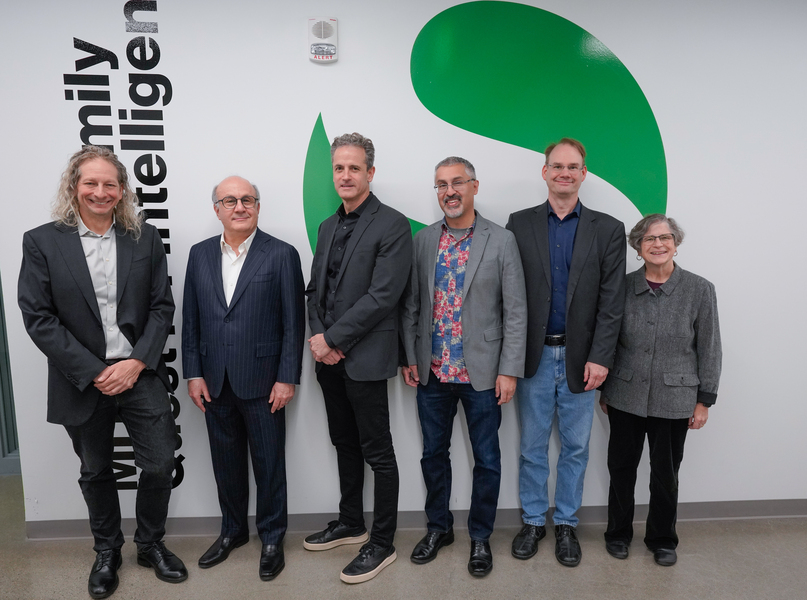
At MIT, a continued commitment to understanding intelligence

With support from the Siegel Family Endowment, the newly renamed MIT Siegel Family Quest for Intelligence investigates how brains produce intelligence and how it can be replicated to solve problems.

Read More →

January 13, 2026/Q&A, Research

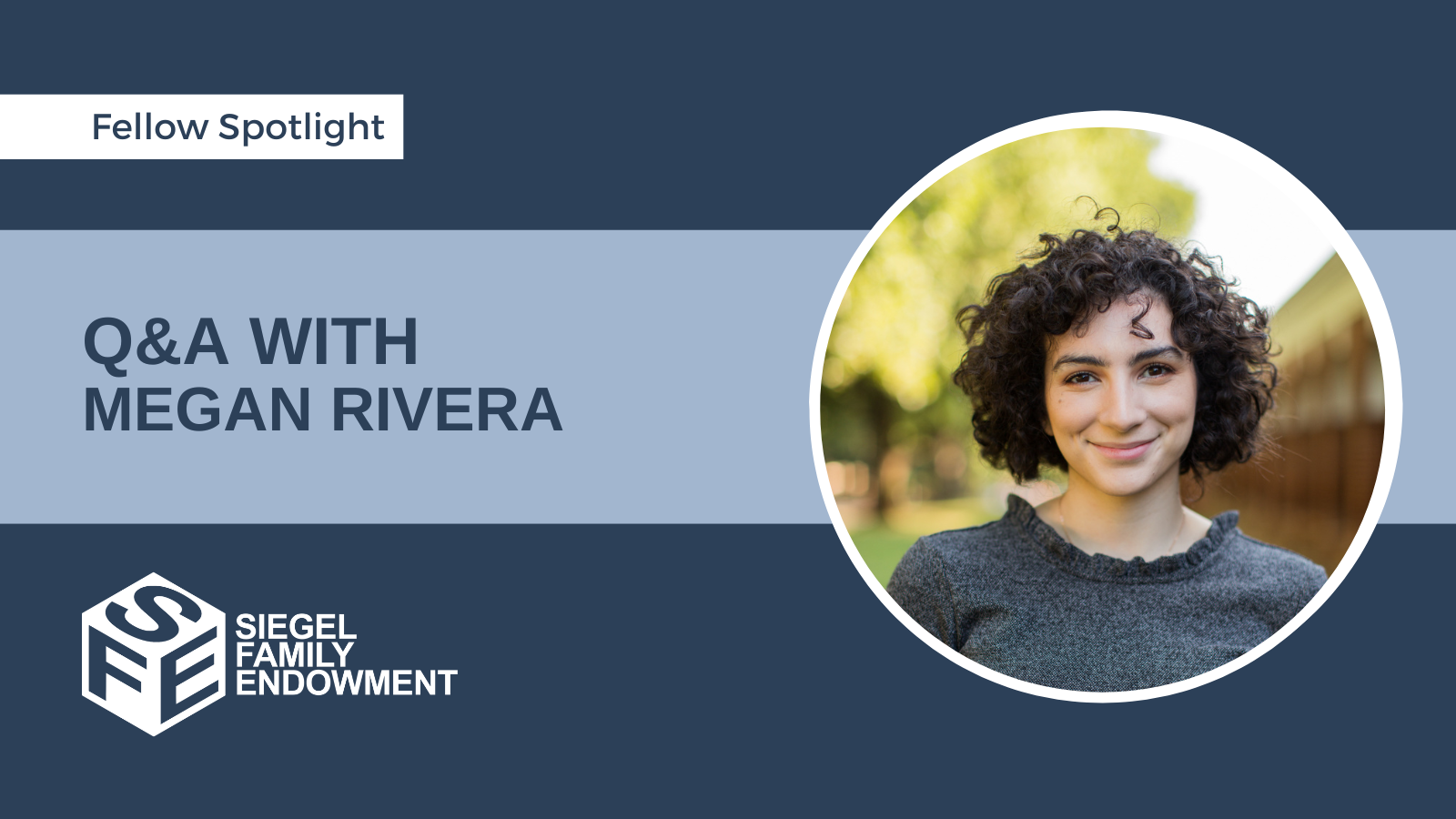
AI and the Labor Market: Megan Rivera on How Policymakers Can Regulate AI to Create a Better Economy for All

Megan Rivera was a 2024-2025 Siegel Research Fellow and is a fellow at the Washington Center for Equitable Growth, where she studies the impact of AI on the labor market and economy, among other topics. We sat down with Megan to learn more about her recent policy brief, how she found her fit working in legislative politics, the potential for integrating worker voice into decision-making around AI, and how the Siegel Research Fellowship helped expand her horizons.

Read More →

January 12, 2026/News, Research

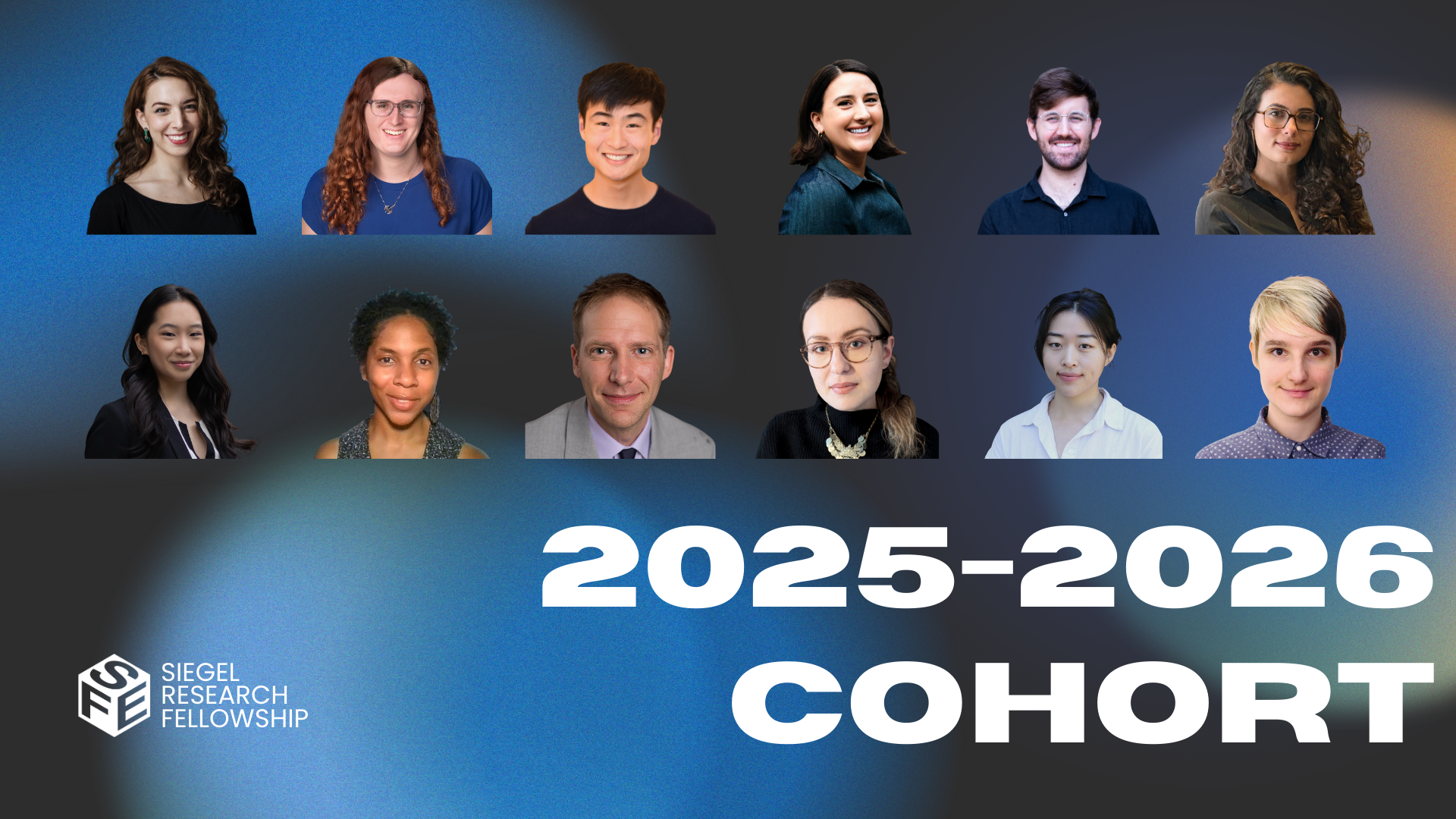
Meet Our 2025-2026 Siegel Research Fellows

Siegel Family Endowment is proud to announce the 2025–2026 cohort of Siegel Research Fellows. This cohort brings together a group of scholars and practitioners working at the intersections of technology, labor, and governance. Spanning economics, computer science, law, ethnography, public policy, and public interest technology, the fellows are united by a shared focus on power, participation, and accountability in technological systems.

Read More →

December 30, 2025/Big Ideas, News

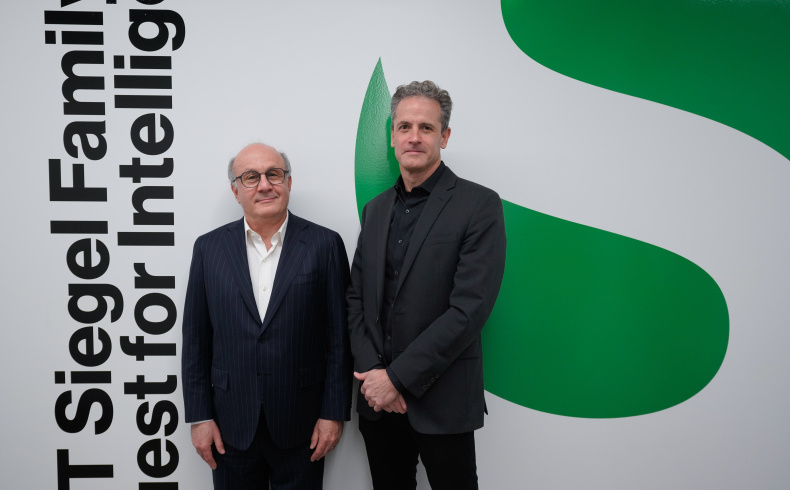
A new name, a continued commitment to understanding intelligence

The MIT Quest for Intelligence has been renamed the MIT Siegel Family Quest for Intelligence in recognition of support from David Siegel. SQI’s goal is to understand intelligence — how brains produce it and how it can be replicated in artificial systems to address real-world problems that exceed the capabilities of current AI technologies.

Read More →

December 18, 2025/News, Reflections

The Quiet Work Shaping Tomorrow

From The Siegel Times, a special edition of our Year in Review, President and Executive Director Katy Knight examines the blueprints, partnerships, and strategies behind 2025’s most under-covered success stories.

Read More →

December 18, 2025/News, Reflections

Our 2025 Year in Review

Introducing The Siegel Times: our 2025 Year in Review, inspired by the look and feel of a classic news magazine and grounded in the work we’ve built together this year. More than a retrospective, this special report brings together feature stories from grantees, letters from leadership, and a clear record of what we’ve accomplished collectively—alongside playful, interactive moments designed to put the buzzwords of 2025 to rest and refocus on what actually matters. It’s a snapshot of a year defined not by hype, but by shared effort, learning, and progress.

Read More →

December 9, 2025/Reflections

Computational Thinking: The Durable Skill We’re Overlooking?

Grantmaking Manager Evan Trout contributes a guest post this #CSEdWeek exploring a key gap in how we talk about “durable skills.” While communication and problem-solving often take center stage, one essential skill is still missing from the conversation: computational thinking (CT). In his piece, Evan breaks down why CT is foundational to young people’s learning today—and why it will matter even more in the future.

Read More →