Bringing the Public House to SXSW EDU and Innovation with the Stanford d.school
SXSW EDU and Innovation serves as both a temperature check and a launching pad. It’s where we track the conversations shaping education, technology, and the broader innovation ecosystem — and where we head into a busy spring season grounded and ready.
It’s also become a kind of home for many of our staff and partners. Over the years, we’ve shown up in different forms, building new formats, testing ideas, and creating spaces for real participation. The throughline is always the same: creativity, openness, and a willingness to experiment.
At its core, SXSW is about people connecting — and this year, that felt more true than ever. As the conference shifted (no Austin Convention Center, a noticeably different crowd), so did the energy. Across our activations, we welcomed hundreds of attendees who weren’t just passing through. They were looking for something more: genuine connection, shared inquiry, and a sense of what’s possible.
A clear signal emerged: people don’t just want new ideas, they want the capacity to act on them. We’re seeing a real push toward distributed creativity, where educators, technologists, and communities see themselves as designers of systems, not just participants in them. It’s a direction central to our work, including our partnership with the Stanford d.school, which holds that design is a shared practice — not a specialty.
Curious what that looked like in action? Read on to hear about our team at SXSW 2026.

Starting at Our Home Base: The Public House at EDU
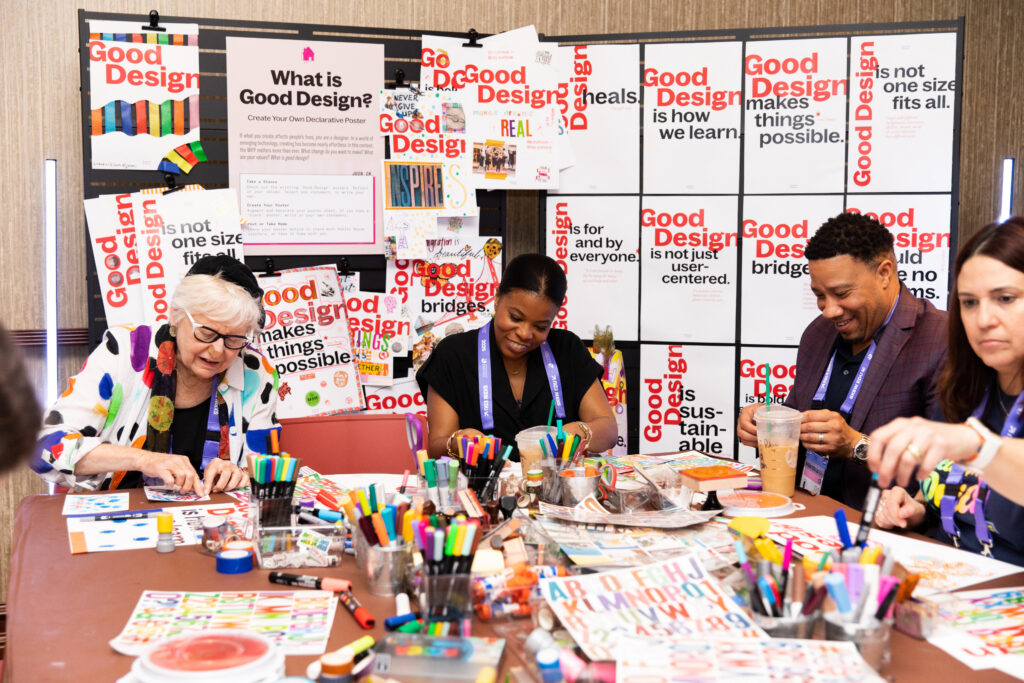
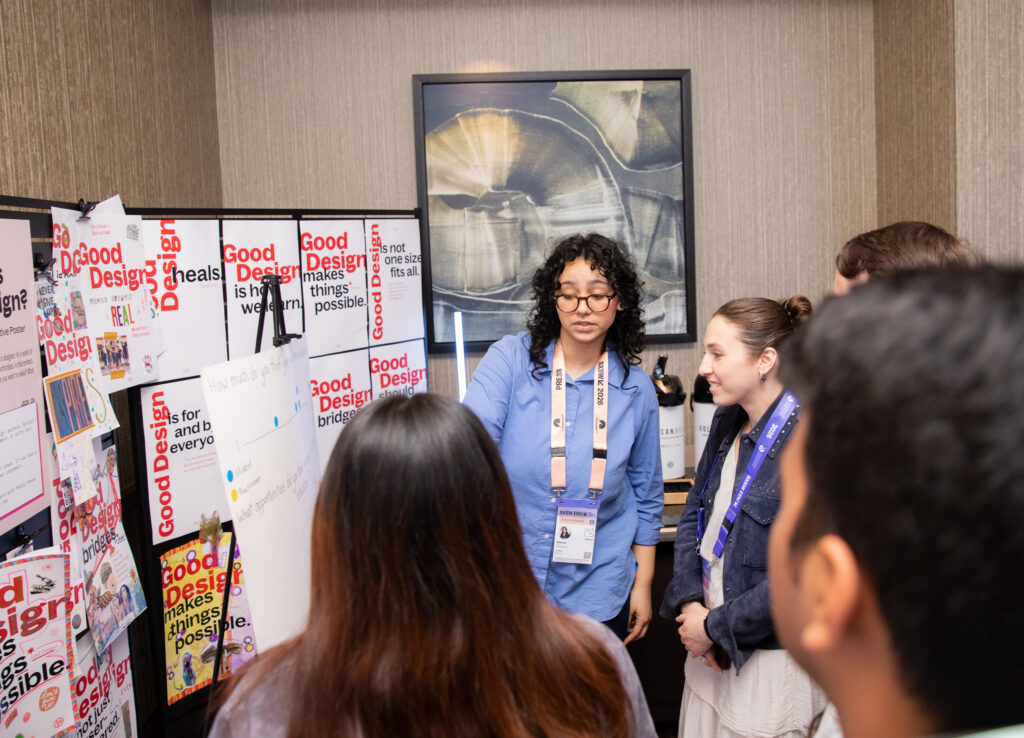
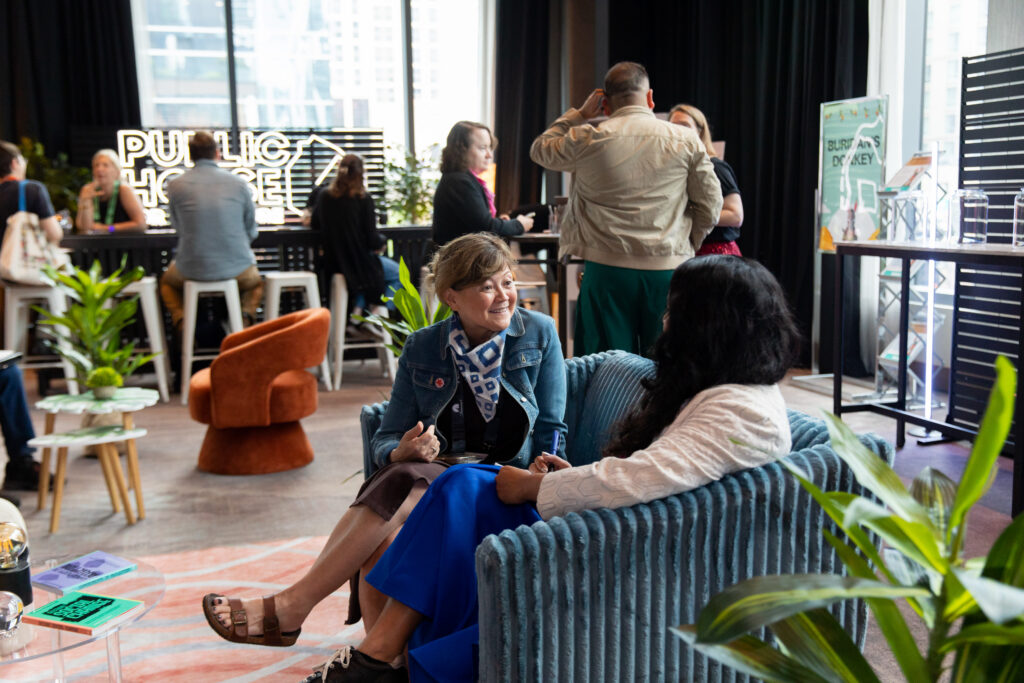
The Stanford d.school transformed a room into something rare at a conference: a hotel conference room where people actually wanted to stay. Building on last year’s Public House concept, this year’s space invited participants to think like designers — not of products, but of the complex challenges facing society. Design as a way of investigating problems, finding patterns, and working toward solutions with intention and care.
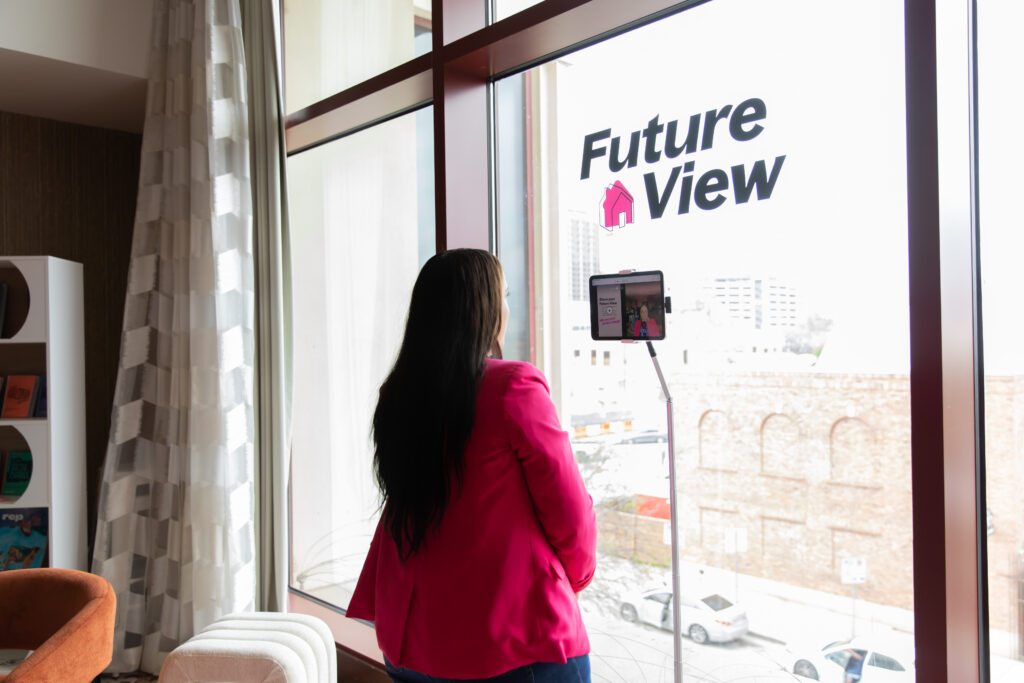
Interactive stations made that tangible. Munaris Dots asked participants to design within constraints, surfacing how differently people approach the same problem — some funny, some dark, some wildly optimistic. The Mystery Machine helped people identify their role in a future ecosystem of builders: builder, weaver, or visionary. The premise: no one does everything, but understanding your strengths and knowing when to lean on others is how complex challenges get solved.Other stations, including Future View and Riff, pushed toward exploration and collaboration.


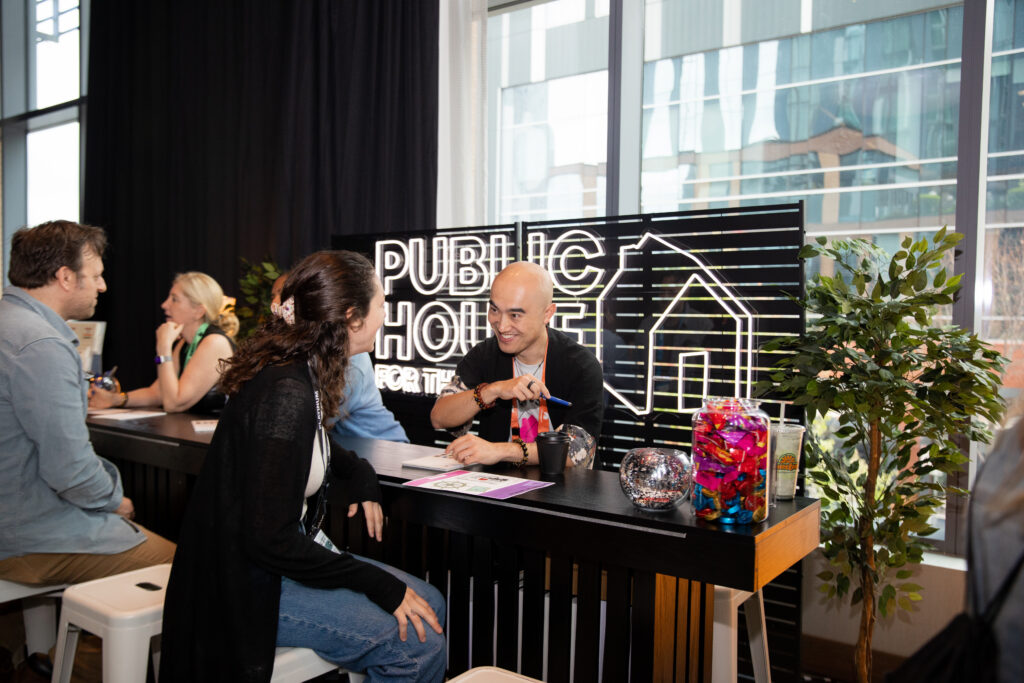
The centerpiece of the room was the Creative Bar, a literal bar serving up “creative genius,” participants sat with d.school experts to work through real design challenges from their jobs, projects, or side hustles. Experts even handed out a physical “Rx pad” of book recommendations, giving people something concrete to take home.

The Public House became proof that the environment shapes thinking. People didn’t just pass through, they stayed, came back, and built real relationships. Informal conversations turned into working sessions. The space itself became infrastructure (much like the Solidarity House before it).
Centering the Next Generation at Youth Takeover Day
Day three of EDU shifted focus to young people. Youth Takeover Day — a full agenda run by The Bell, PBS Student Reporting Labs, and NPR — grew directly out of last year’s experience. Siegel had supported students from The Bell to attend the 2025 SXSW EDU conference, and one of them, Salma Baksh, came away with a clear takeaway: the experience was valuable, but making meaningful connections with other young people and being heard was harder than it should have been. So this year, she proposed taking over the lounge and building that space herself.
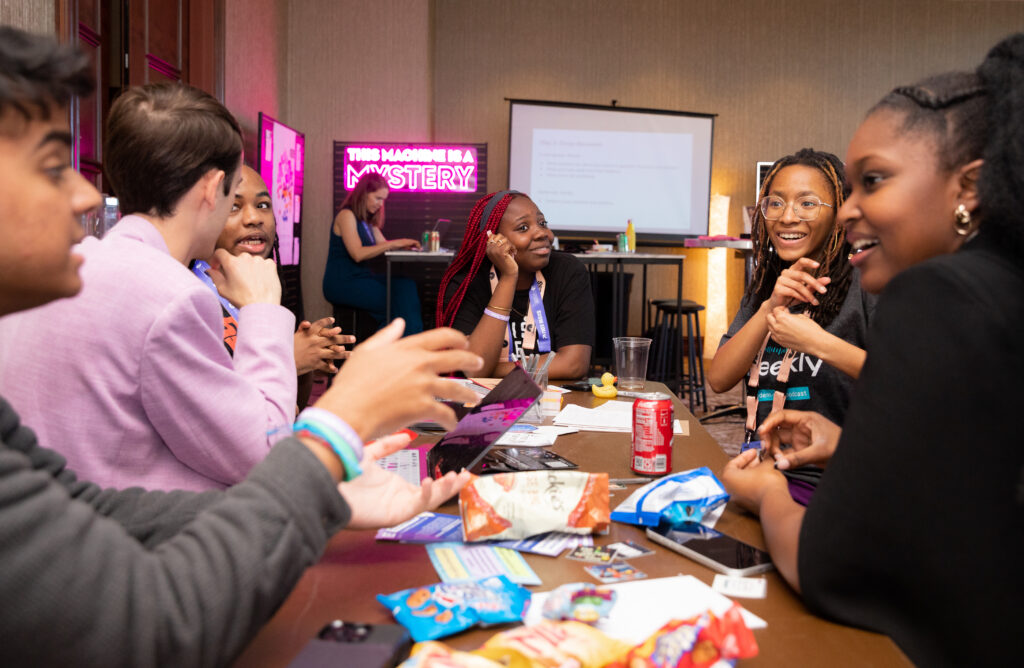
Eighteen students joined Salma and partners for a packed day. They ran podcasting and interview workshops, led the Youth Changemakers Idea Swap (where students pitched their education ideas directly to professionals), and got an unplanned visit from Pulitzer Prize winner and 1619 Project creator Nikole Hannah-Jones. Julia Shatilo, Senior Director of Programming at SXSW EDU, also attended and engaged, listening, discussing, and exploring how to better integrate youth voice into the conference itself.
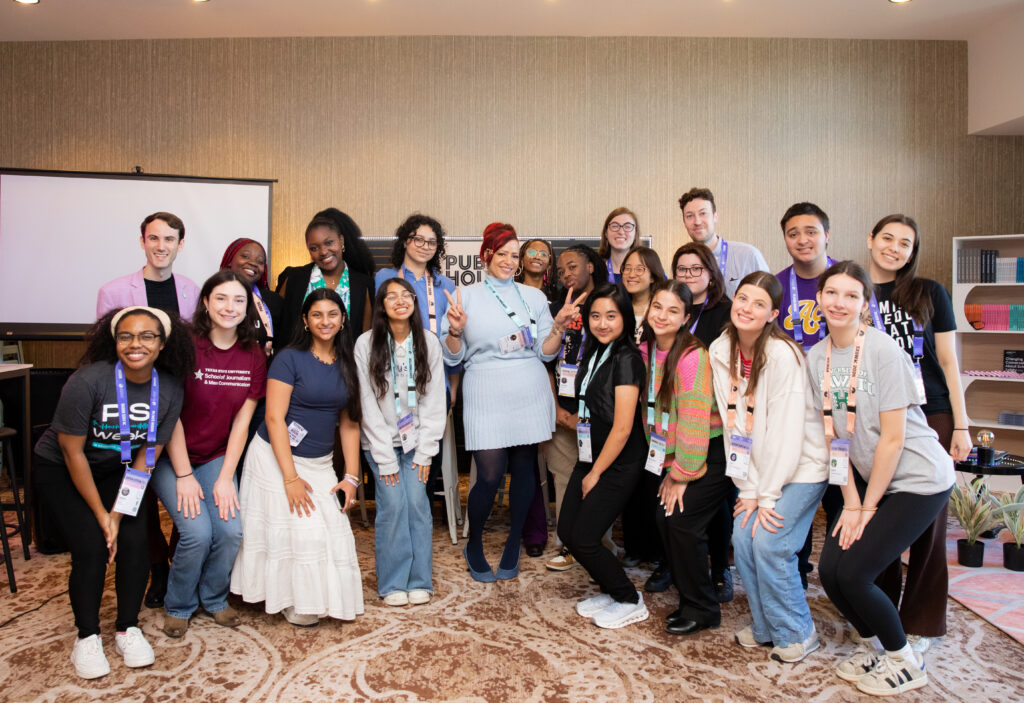
The lesson held for everyone in the room: when young people have a real platform, the conversation changes. That’s not just good practice for equitable access — it’s how better systems get built.
Closing Out EDU: Connections Worth Celebrating
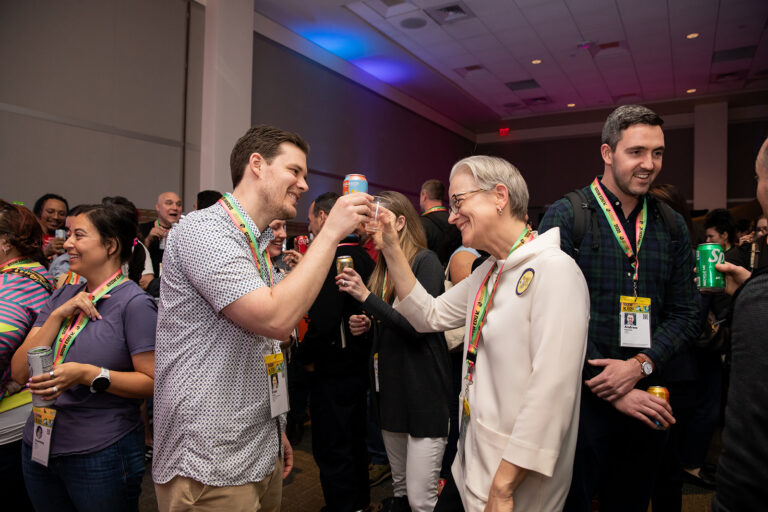
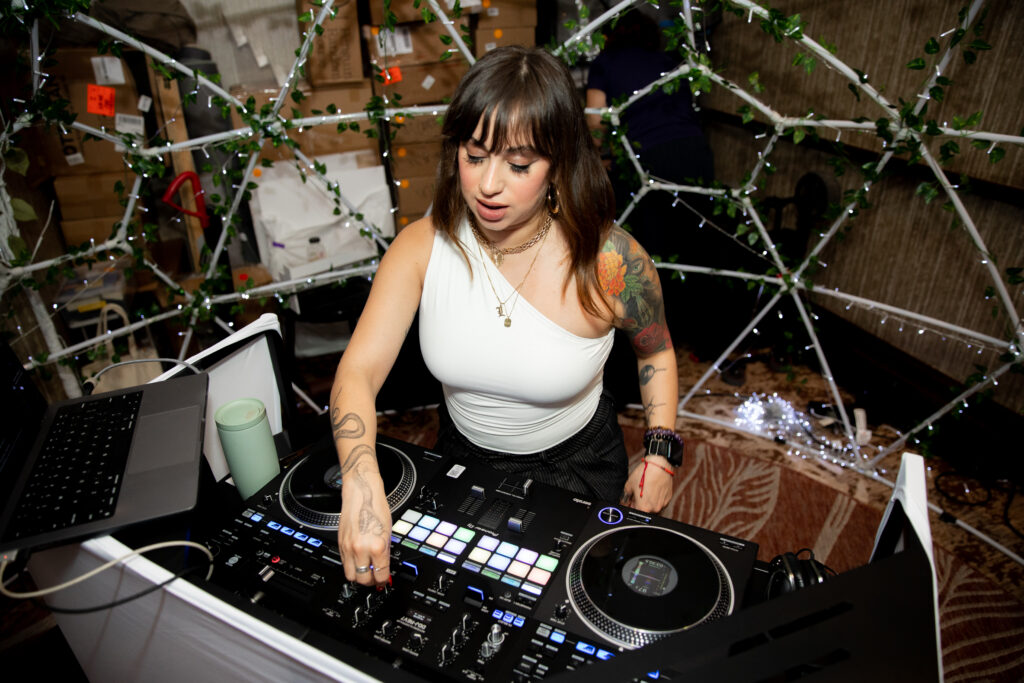
Our time at EDU wrapped up the way it should — with our annual funders happy hour and a genuine celebration. Why celebrate? Because the future of education is exciting, and figuring it out together takes joy, not just effort. Because the relationships built throughout the week deserved a proper toast. And because connection is infrastructure and strengthening it sometimes just means making time to enjoy each other’s company.

Expanding the Frame: Innovation Track, Public House & Paradox Sessions
What if we took everything that made the Public House work — the openness, the curiosity, the cozy refusal to feel like a conference — and brought it to the wider innovation ecosystem? That was the ambition behind our first-ever SXSW Innovation sponsorship with the Stanford d.school. Instead of fitting into the standard conference format, we wanted to blow it up: replace rigid programming with open space, swap panel seating for couches, and create an environment where innovators could actually slow down and think.
On Saturday, March 14th at the Thompson Hotel, that vision came to life. We wanted to reach innovators wrestling with how AI and technology fits into their work, their creativity, and their lives — but who hadn’t yet found the language or space to explore it. The anchor of the day was our Paradox Sessions: intentional conversations designed to hold complexity rather than resolve it too quickly. One session tackled the knowledge paradox: how do we keep information open and accessible without enabling AI to exploit it? Another explored the storytelling paradox: as technology reshapes distribution and profit, how do storytellers preserve their power to connect and transform? The day closed with a d.school design workshop and a celebration, a fitting end to a week built around big questions and genuine human connection.
What It All Points To
The numbers tell part of the story: hundreds of people, countless conversations, activities completed, books handed off to people with real problems to solve, and participants who left with new language for challenges they’d been carrying for years. What it all added up to was clear: the openness, the willingness, the hunger to build something new — it’s everywhere. What people need is the space, the tools, and the right people around them to make it real.
For years, through deepening practice and return visits to SXSW, we’ve been asking how to do that better — how to make the work not just inspiring but durable, rooted to specific places, problems, and communities. This year, we’re excited to see that question finally take shape through our Societal Designers Project with the Stanford d.school. An extension and deepening of everything the Public House represents, Legions will work with localities across the country to activate networks of community designers — people equipped to tackle the challenges in front of them. If you’re interested in partnering with us, we’d love to hear from you.
To every partner and participant who made SXSW possible: thank you. It’s sent us into the year ahead energized and ready to push on what we think is possible.