
Siegel’s goal is to build fields and shape systems. Indeed, our “External Engagement” team is called that because we think bigger than communications. We consider the entirety of narrative infrastructure — the relationships, platforms, and cultural conditions that determine which stories get told and how they spread. Change starts with imagining the change. And that starts with stories.
Creating and spreading alternative stories requires engaging culture makers — filmmakers, writers, producers, and storytellers who shape how millions of people understand the world. These creators have the craft to make complex ideas accessible, the platforms to reach diverse audiences, and the cultural credibility to influence public discourse in ways that research reports and policy briefs cannot.
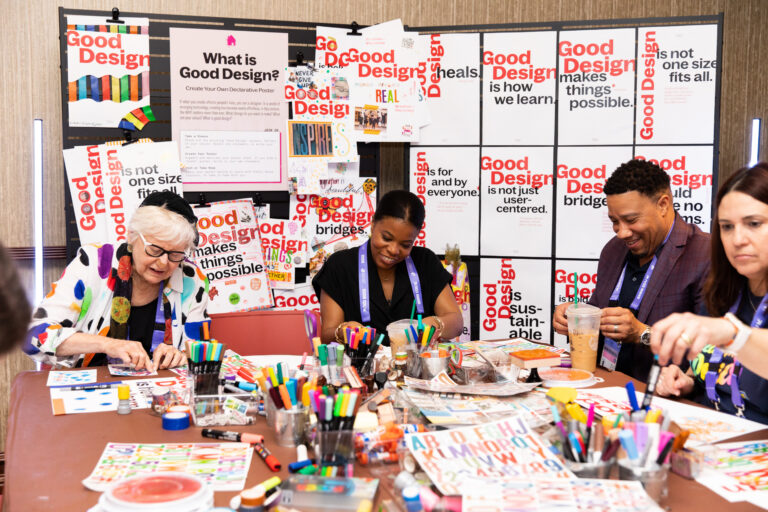
At Tech Together 2025, we engaged experts from Seed & Spark and (m)otherboard to host a narrative workshop for our 200 funder and field partner attendees (read more). It was a powerful reminder that narratives and culturemakers help shape how the public understands technology’s impact on society, a crucial lever for creating the narrative conditions our grantmaking and research need to succeed.
We continued that work at Sundance Film Festival 2026 with our sponsorship of the Solidarity House. Sundance brings together exactly the kind of purpose-driven, values-aligned storytellers. The festival attracts filmmakers working at the intersection of technology, society, and human experience, people already grappling with how to tell nuanced stories — many of them about our technological moment. They’re not looking for dystopian fear-mongering or Silicon Valley propaganda (though this is what sells on Netflix and HBO…); what sets Sundance apart is that many in its community are searching for authentic narratives that reflect lived realities
Why Solidarity House?
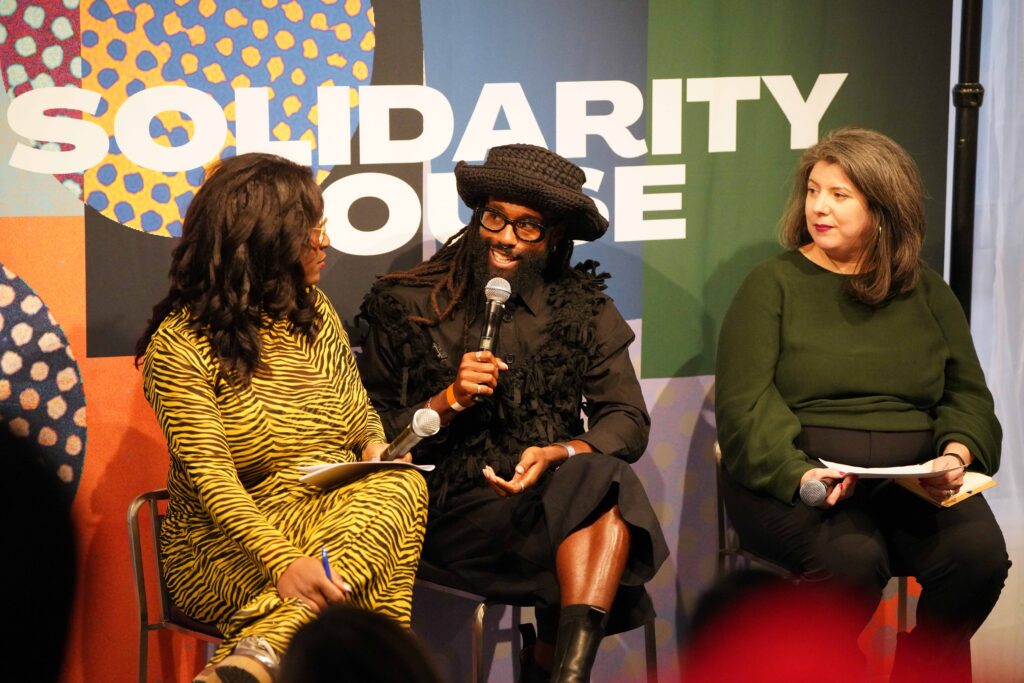
The Solidarity House is a coalition of 55 independent film and media organizations that came together to create a shared space at Sundance for community building, education, and solidarity among independent storytellers. Rather than each organization hosting separate events, they pooled resources to create what organizer Emily Best calls “a third space for the independent film community.”

What makes Solidarity House significant is both its scale and its values. Together, the coalition serves and supports over 11,000 artists — massive reach compared to individual organizations or even Sundance itself. But more importantly, the House represents a different model of how the creative community can organize. It’s built on principles of mutual aid, resource sharing, and collective action rather than competition for limited attention and funding. The physical space itself became proof that alternative infrastructure is possible when organizations collaborate rather than silo their efforts.
This infrastructure focus is what drew us to sponsor Solidarity House. These organizations provide the underlying training, funding mechanisms, distribution platforms, and community support that feed into the rest of the industry. By strengthening this ecosystem, we’re not just supporting individual filmmakers; we’re investing in the conditions that make independent, purpose-driven storytelling sustainable over time.

Our Takeaways
1. Solidarity as Infrastructure, Not Abstraction
At its core, Solidarity is about building a community that takes care of one another and has the agency to decide its own fate. The Solidarity House itself became the message — 55 organizations crowdfunding a physical space proved that narrative change infrastructure is possible and already being built. Multiple attendees cited the activation as “changing someone’s mind” simply by existing. Solidarity requires sacrifice and community care made visible, not just rhetoric. In order to get away from treating the space as transactional, Solidarity House Organizer Emily Best’s implored the audience after each panel to “make one ask and one offer — but they can’t be the same person.” If everyone fulfills what they say they’ll do, we’ll be made whole as a community.
2. Agency Requires Alternatives
A consistent theme across panels: “Agency is grounded in the availability of alternatives.” We can’t ask audiences to imagine different tech futures without building the actual alternatives — ethical platforms, non-algorithmic distribution, community-owned infrastructure. The availability of alternatives is what makes choice, and therefore agency, possible.
3. Joy and Defiant Optimism
In addition to Resistance Narratives, we have the opportunity to expand beyond fighting frames toward celebration and “defiant optimism.” Joy draws more people in than fear or critique alone. The question that resonated: “How do you make responsible stewardship feel as exciting as disruption?” Storytellers need narratives of abundance and possibility, not just exposé.
4. Tech Platforms Are Media Platforms
The storytellers of technology are increasingly the owners of technology, warping the more insulated mirror that media has held up to society. Major tech companies today operate like major media studios because engagement remains the primary product. We need to be careful about how we see each other when the stories we consume and what we learn about the world are filtered through commodification.
The merging of Media and Big Tech ownership also has had another major consequence: erasure in the pipeline from community to creativity. Distribution systems mean that many stories aren’t told — they aren’t even eligible for theatrical distribution — but they can still share themselves on TikTok. In response, filmmakers are building multimodal, non-algorithmic audiences through direct relationships (email lists, third spaces) rather than relying on platform economics.
5. Culture Change Has Its Own Timeline
Speed is not a proxy for impact. Narrative change requires “civilization-levels of patience” — sustained investment in alternative systems until they work, not one-off projects. Documentaries and moonshot projects aren’t the solution. We need to think of change as an ecosystem of little touch points, making philanthropy’s challenge funding the long game: artists on retainers producing work that responds to the cultural moment, infrastructure that supports storytellers over years, not grants tied to immediate political outcomes.
6. Fandom as Practice Ground for Collective Action
Fandom emerged as an underutilized model for building solidarity and collective imagination. Sports have given men permission to practice shared emotions — loss, frustration, joy — for centuries; other fandoms create similar containers for experiencing collective identity and coordinated action. Fandom teaches people how to work toward shared goals, hold relationships with characters and stories over years (not just react immediately like with documentaries), and “break containment” to accomplish things offline. The insight: we need to understand fandom not as passive consumption but as training grounds for the kinds of collective organizing and emotional investment required for building alternative tech futures.
What’s Next
Our investment in the Solidarity House at Sundance was the beginning of sustained engagement with the storytelling ecosystem. We’re building infrastructure for ongoing dialogue between culture makers and the public interest technology field, ensuring that as AI continues reshaping society, there are powerful counter-narratives that help people imagine and build better technological futures.
Siegel is not positioned to directly fund art and storytelling; organizations like Mozilla Foundation, Doris Duke Foundation, and Omidyar Network are expertly operating in that space, especially as AI transforms creative work. Our strength lies elsewhere: identifying storytelling hubs, strengthening infrastructure, and connecting culturemakers to field partners who are building the alternatives that need stories told about them.
Our ultimate vision isn’t to control the narrative but to flood the market with stories, ensuring that people can find narratives about technology that resonate with their values, reflect their lived experiences, and imagine futures worth building toward.