
Last week, as global leaders, policymakers, and civil society organizations convened in New York for the UN General Assembly (UNGA), the question of how to govern artificial intelligence dominated the agenda. From debates on international regulatory frameworks to the role of AI in achieving the Sustainable Development Goals, the conversations reflected a shared recognition: AI is no longer just a technological shift; it is a profound geopolitical and societal transition.
But as heads of state and multinational tech executives debated global regulations, we recognized a critical gap in the ecosystem: How do social impact organizations fit into this rapidly forming architecture?
The prevailing narrative around AI is often one of overwhelming speed and inevitability. For many, observing these global summits can generate a persistent background anxiety, a feeling that the technology is moving too fast, driven by sovereign and corporate actors too large for civil society to meaningfully influence.
To challenge that narrative, we hosted two events: Philanthropy at the Frontier (a closed door working session with foundation executives) and Tech Together: Move Fast and Tell Jokes (a comedy show about AI). The first set out to help foundation leaders see themselves and their mission-driven work clearly within this current technological moment. The second was for the laughs. And laugh we did.
Philanthropy at the Frontier
To effectively shape the future of technology, philanthropy must become more informed and empowered to make funding decisions about it. That is why a core piece of our field-building work involves providing AI workshops tailored to foundations.
We, along with our partners at Fathom, brought together ~50 foundation executives at the IBM’s New York office for a full-day event, Philanthropy at the Frontier. Our goal was to unpack the complex systems surrounding AI: the technical stack, the geopolitical landscape, the emerging regulatory standards, and organizational transformation. But acquiring technical knowledge is only half the battle. The other half is being in community as we learn and having trusted peers we can call to help make sense of a new model release or a sudden shift in policy. This event aimed to do both.
Session Highlights
Throughout the event, we used the metaphor of a road trip to break down the multidimensional infrastructure of AI. Here is a brief look at how the day unfolded:
- Demo. Kyle Munkittrick from Anthropic presented a use case showing how AI can be used to complete more complex, multisteps tasks that would take humans hundreds of hours
- Panel 1: View from the AI Frontier. We looked under the hood of AI to understand the technical foundation, breaking down frontier capabilities—from parameter scaling to agentic systems to open-source versus closed architectures—so funders could evaluate AI as a technical stack rather than just a software tool. Importantly, the panel examined how commercial tech infrastructure intersects with the public good, focusing on how philanthropy, academia, and civil society can work together to build, evaluate, and shape public interest AI.
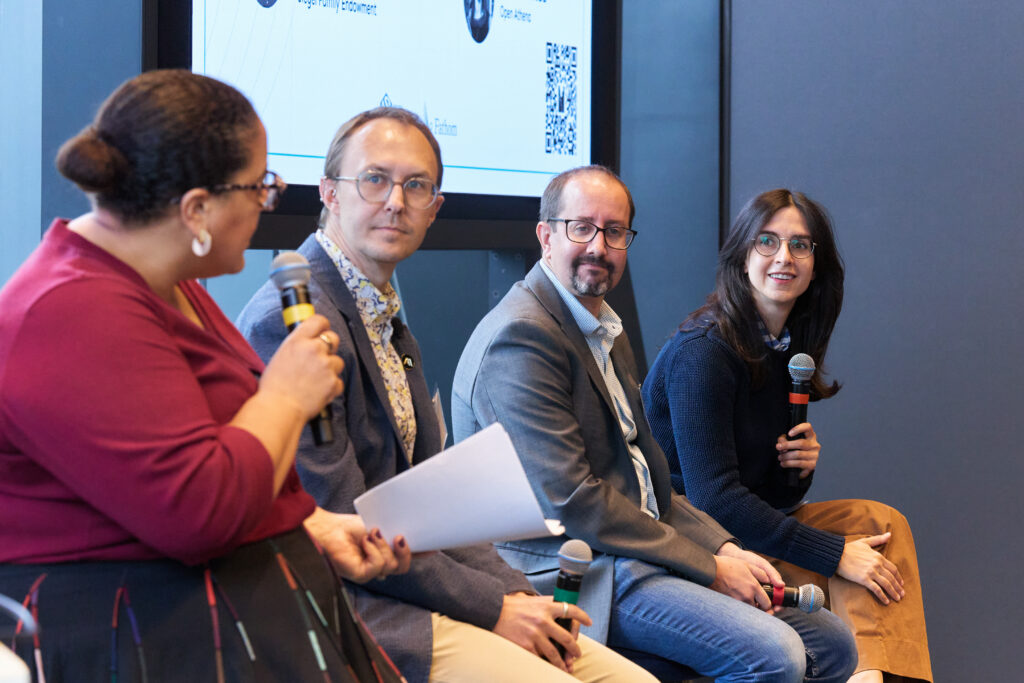
- Spark Talk: New Risk Horizons. Moving beyond the code, AI Scholar Kate Crawford mapped the true planetary scale of AI, examining the physical supply chains, resource extraction, and structural power dynamics that underpin these models.
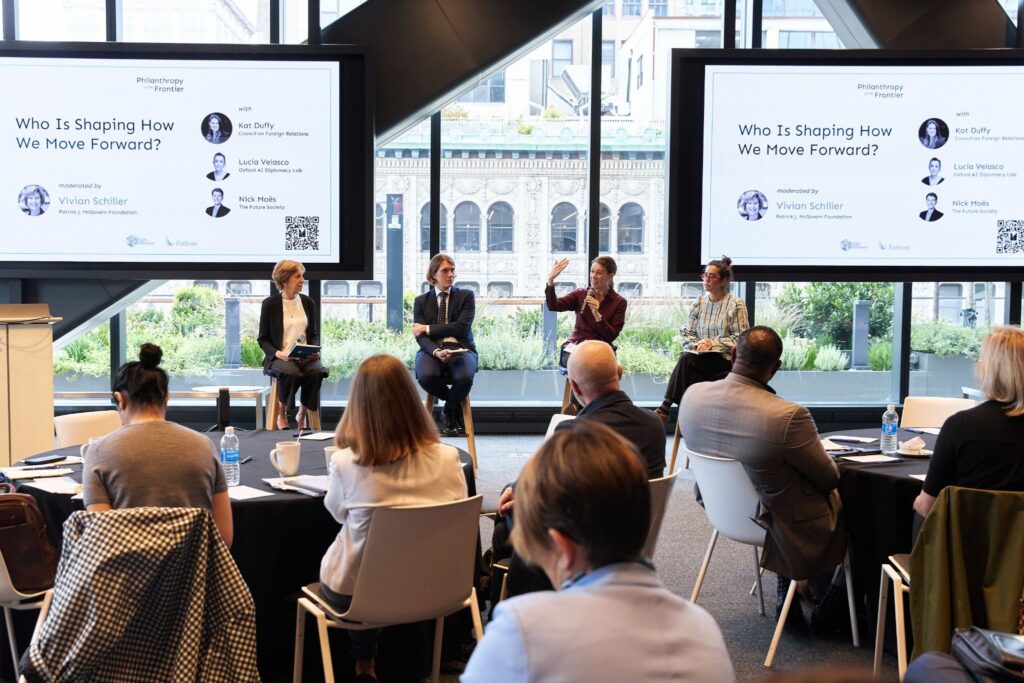
- Panel 2: Who is Shaping How We Move Forward? We mapped the geopolitical forces shaping AI’s development – from the high-stakes technological rivalry between the U.S. and China to Europe’s enforcement of landmark regulatory frameworks, alongside the rise of “middle-power” nations seeking technological sovereignty. Above all, the discussion highlighted where non-government actors and philanthropic capital can exert real leverage to safeguard democratic oversight and public-interest values.
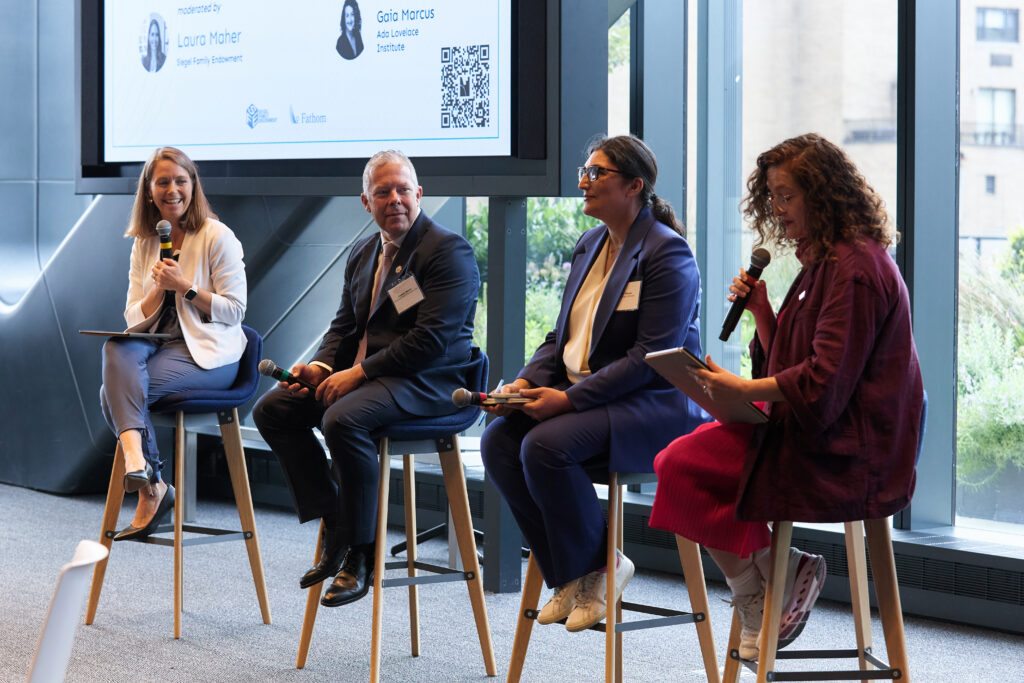
- Panel 3: Technical Standards, Policy, and Sensemaking. This panel shifted from macro, high-level policy to the practical engineering of governance: how to establish shared standards, measure model capabilities, build auditing tools, and operationalize safety frameworks. Panelists unpacked how global institutions, research bodies, and organizations translate high-level goals into testable, executable standards.
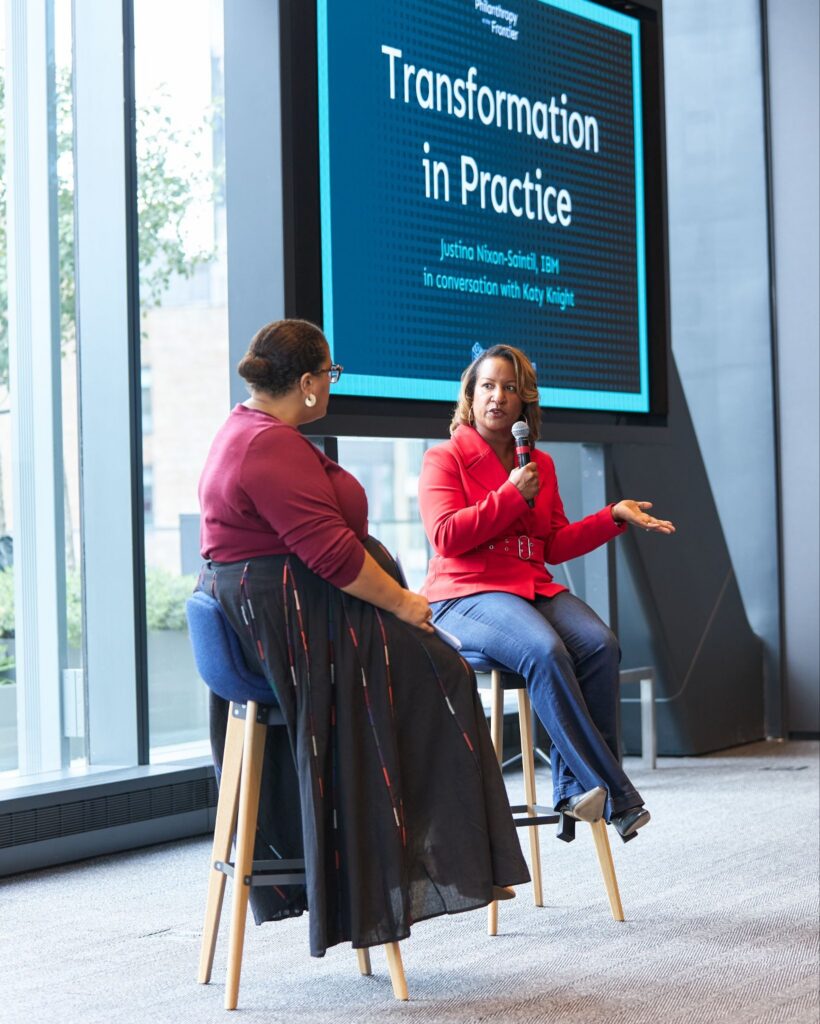
- Fireside Chat: Transformation in Practice, with Justina Nixon-Saintil, IBM. We then pivoted from the theoretical to the practical, look at how these tools are actually being deployed to drive real-world outcomes at IBM to make better, more impactful decisions at scale.
- Interactive Workshops: Attendees transitioned from high-level stage presentations into deep dive working groups around one of the following topics
- AI Benchmarks: Making It Easier to Do the Right Thing: Benchmarks for the AI We Want. With B Cavello from Aspen Digital
- AI Capabilities: What AI Can Actually Do, and Why Its Own Builders Are Calling for a Slowdown. With Adam Gleave Jenn Thom from FAR.AI
- Cognitive Security: How AI shapes our minds, why and when this matters, and how we defend against it. With Dr. Carla Zoe Cremer
- AI Governance Floor: The Case for a Global AI Governance Floor. With Friederike Schüür and Julia Smakman, Ada Lovelace Institute
- Public Interest AI Stack: Who Owns the Road? Building a Public Option for AI. With Ayah Bdeir, Current AI

Tech Together: The Power of Collective Laughter
In the evening, teamed up with All Tech is Human, we hosted Tech Together: Move Fast and Tell Jokes, a comedy show about AI hype. Joined by stand-up veteran Chuck Nice and Pratima Mani, an Emmy-winning writer for The Late Show with Stephen Colbert, we knew people needed a good laugh about the absurdity of the current moment.
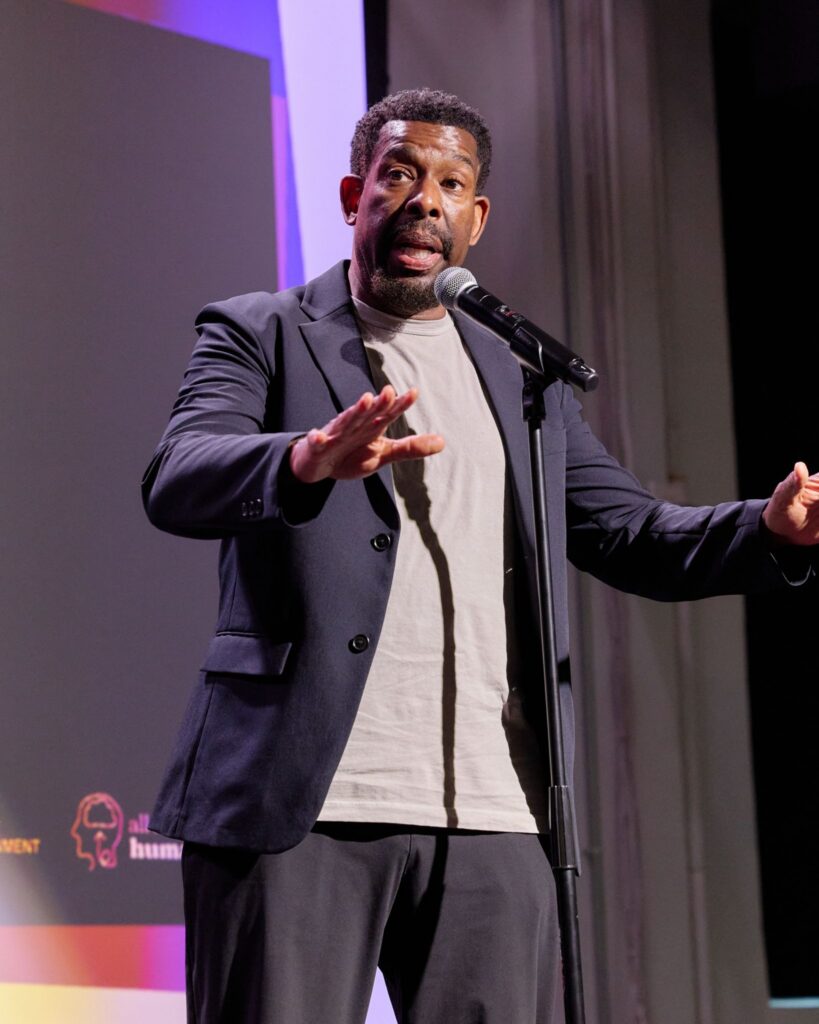
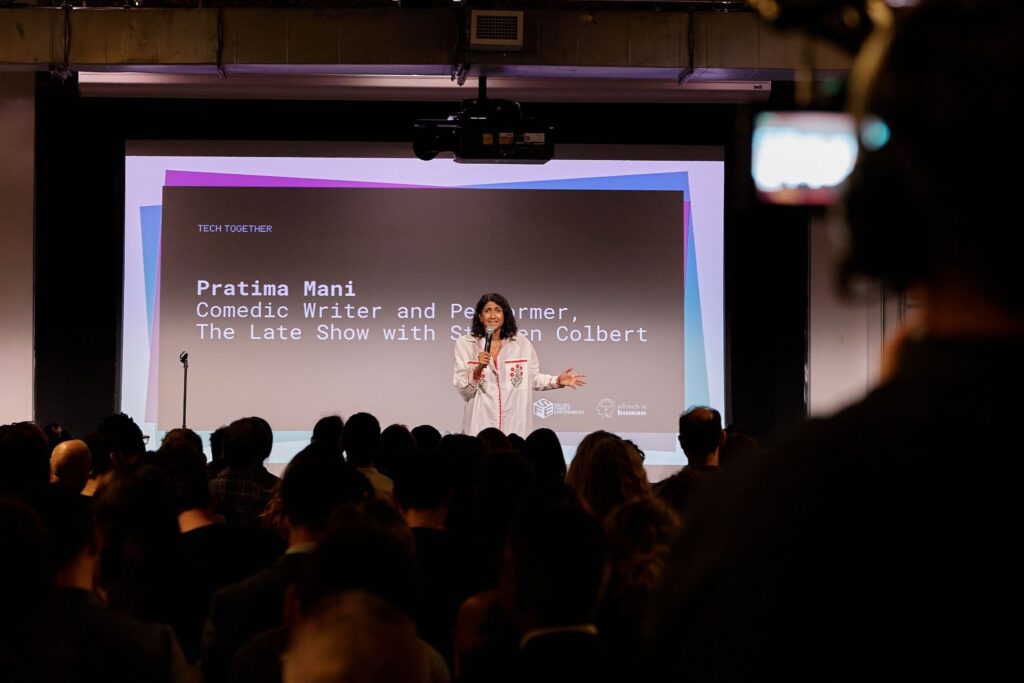
But the evening delivered something far more profound. Chuck and Pratima held a mirror up to the underlying worries and fears many of us are experiencing, using humor to safely disarm them. We shouldn’t have been surprised; the best comedians make their careers not just by telling jokes, but by telling poignant stories about the human condition that the rest of us struggle to put into words.
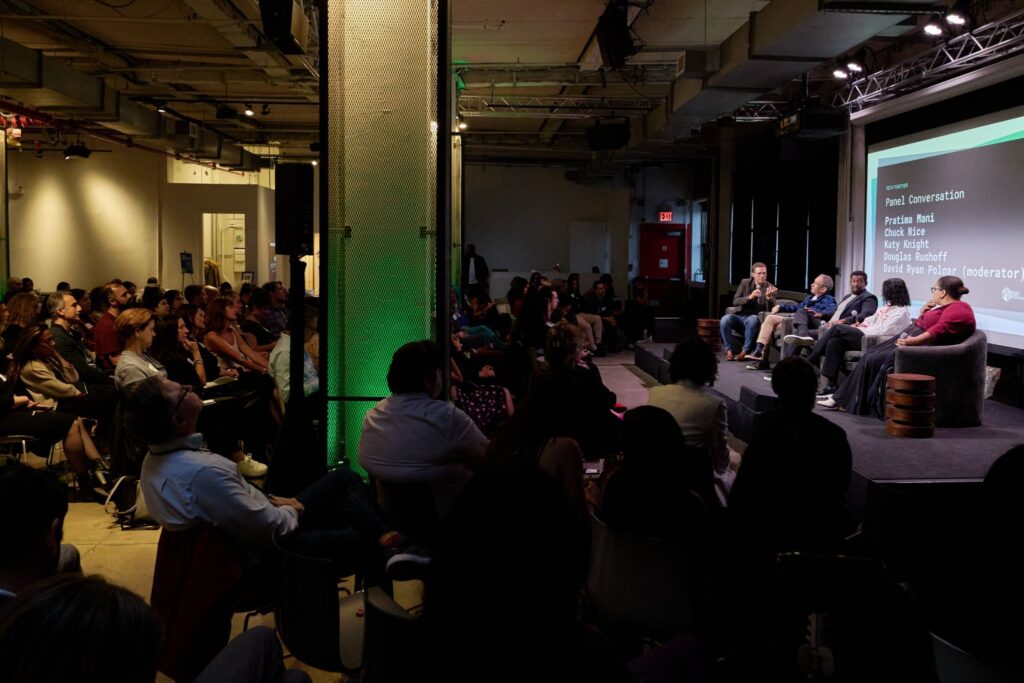
In the panel discussion that followed, the comedians were joined by author and media theorist Douglas Rushkoff. Together, they ushered us to safely confront the darkness and absurdity of today’s tech headlines, offering a genuine moment of catharsis. As Douglas noted, “Fear often leads to a desire for control; comedy puts us back in our bodies.”
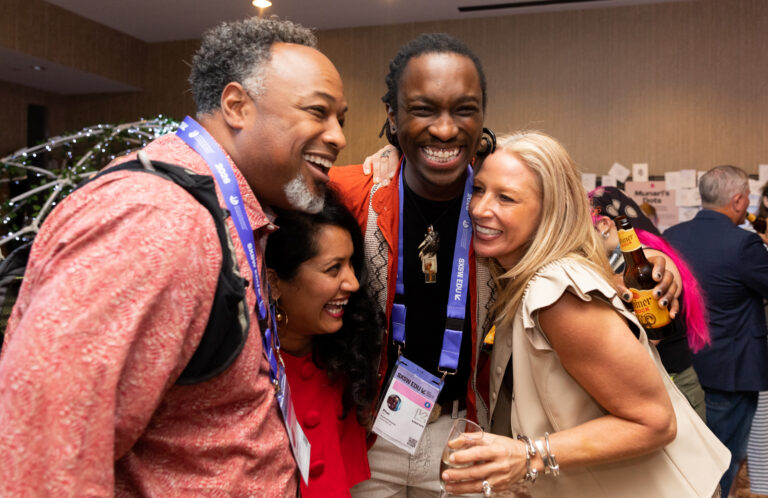
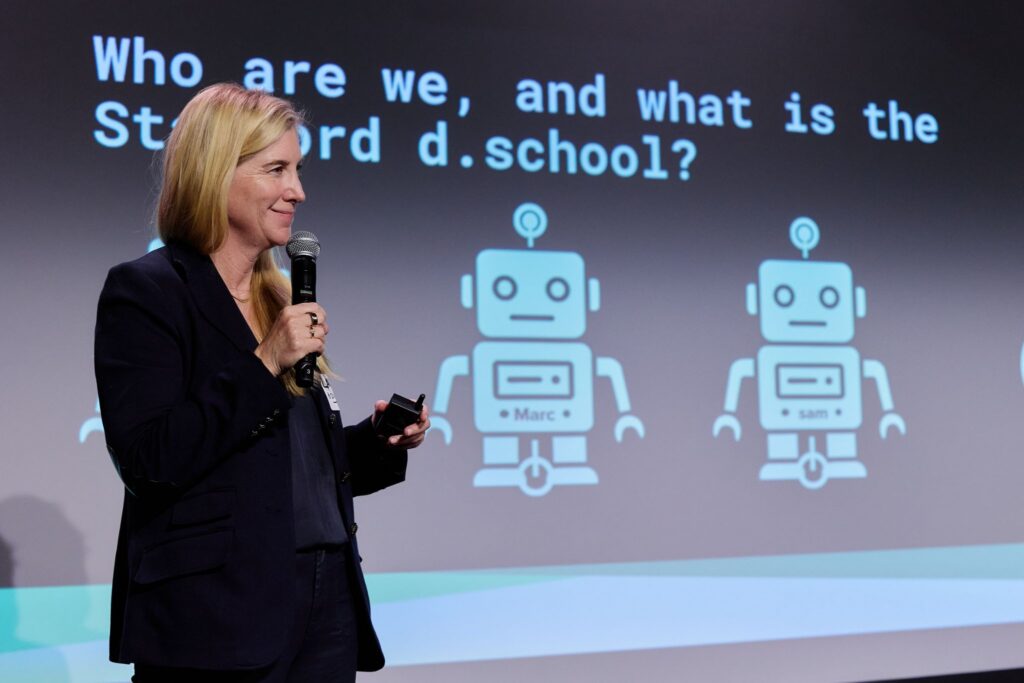
To bring that idea to life, our friends at the Stanford d.school closed the show with an interactive improv activity, inviting the audience to name, voice, and laugh at some of our fears about AI. It turns out that laughing alongside 220 other people can be its own kind of perspective. For a moment, we were reminded that we’re not navigating this technological shift alone.

From Paralysis to Agency
Ultimately, these two events—one grounded in technical strategy, the other in shared humanity—served a common purpose: moving the public tech sector from anxiety to agency.
We must demystify this technology so we can govern it. We have immense power to shape how AI is deployed, but exercising that power requires both the technical literacy to understand the systems and the grounded, human perspective to remember exactly who those systems are supposed to serve.